West Indies vs Australia
Introduction:West Indies vs Australia Cricket
Cricket is more than just a game; it’s a narrative written in runs, wickets, and moments of sheer brilliance. And few narratives in the sport are as rich, dramatic, and historically significant as the one between the West Indies and Australian men’s cricket teams. To look at their head-to-head scorecard is not merely to read a list of results, but to journey through the evolving soul of international cricket itself—from the calypso dominance of the 70s and 80s to the Aussie grit of the 90s and 2000s, and the thrilling, unpredictable contests of the modern era.
Table of Contents
The Foundation: An Unlikely Rivalry and Early Skirmishes
For much of cricket’s early history, the great rivalry was England vs. Australia—The Ashes. The West Indies, while talented, were often seen as an inconsistent force. However, the seeds of a new rivalry were sown during the 1960-61 tour of Australia, a series that is legendary for one reason: the Tied Test. The first in cricket history, it was a breathtaking advertisement for the game, showcasing the West Indies’ flamboyant batting and the Australians’ never-say-die attitude. While the series ended 2-1 to Australia, it announced the West Indies as a coming power.
The true shift, however, began in the mid-1970s. Under the leadership of Clive Lloyd, a wounded West Indies team, smarting from a bruising defeat to Australia in 1975-76, decided on a new strategy: fearsome, relentless fast bowling. This gave birth to one of the most dominant eras any sport has ever seen.
The Apex Predators: West Indies Dominance (Late 70s – Early 90s)
For nearly two decades, the West Indies were the undisputed kings of world cricket, and their scorecard against Australia is a testament to their supremacy.
The Defining Series: 1984-85 Frank Worrell Trophy
This wasn’t just a series win; it was an annihilation. Captained by Clive Lloyd and featuring the fearsome quartet of Marshall, Holding, Garner, and Walsh, the West Indies whitewashed a strong Australian team 3-0. The scorecards from that series are a fast bowler’s dream. The batsmen, led by the elegant Gordon Greenidge (who scored 513 runs in the series) and the explosive Viv Richards, piled on the runs, while the bowlers dismantled the Australian lineup repeatedly. This series cemented the Windies’ aura of invincibility.
Memorable Match: 1991, Adelaide Oval
This match is a classic example of a scorecard that tells a story of individual heroism versus team effort. Australia, set a massive 372 to win, were seemingly down and out at 74 for 4. Then, a young, blond all-rounder named Craig McDermott, better known for his bowling, played the innings of his life, scoring a gritty 42 to help secure an unlikely draw. The match is remembered not for a West Indian win, but for the sheer fight displayed by the Australians against the odds—a sign of the resilience that would define them in the coming years.
Key Scorecard Takeaway from this Era:
- Test Matches: The West Indies built a formidable record, particularly at home. Their dominance was near-total.
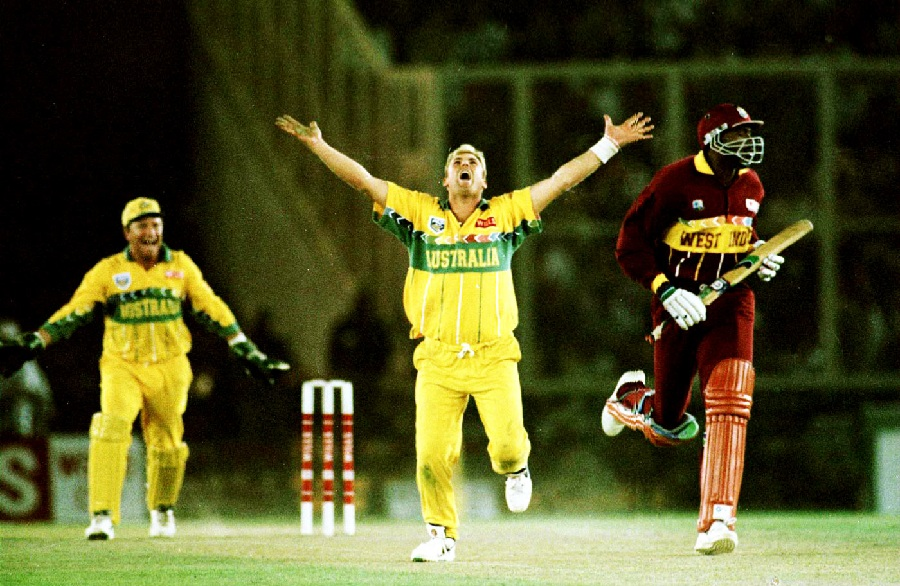
- World Cups: The two teams met in the inaugural 1975 World Cup final, where the West Indies emerged victorious. They clashed again in the 1996 semi-final, a match remembered for an iconic Shane Warne delivery to dismiss Richie Richardson, but it was the West Indies who ultimately faltered, losing narrowly.
The Tide Turns: The Australian Fightback and Ascendancy (Mid-90s – 2010s)
The early 1990s saw the decline of the great West Indian team and the simultaneous rise of an Australian juggernaut under Allan Border, Mark Taylor, and later, Steve Waugh. The scorecard began to reflect a dramatic power shift.
The Defining Series: 1994-95 Frank Worrell Trophy
This was the series where the crown truly slipped. Australia, led by Taylor, travelled to the Caribbean and defeated the West Indies 2-1, ending their 15-year unbeaten run in Test series. The scorecard from the final, series-deciding Test in Jamaica is iconic. Chasing 191 for a historic win, Australia were reeling at 74 for 5. Then, Shane Warne, primarily a bowler, played a swashbuckling innings of 36, and along with Justin Langer, guided Australia home. This was more than a win; it was a symbolic passing of the torch.
Record-Breaking Performance: Brian Lara’s 277, Sydney 1992-93
While his team was often on the losing side during this transition, Brian Lara stood as a colossus. His first Test double-century, a magnificent 277 at the SCG, announced his genius to the world. It was an innings of sublime stroke-play that single-handedly secured a draw for the West Indies. This scorecard entry is a permanent reminder that even in a team’s decline, individual greatness can shine through.
The ODI Rivalry and the 1999 World Cup
The rivalry burned just as brightly in colored clothing. The 1996 World Cup saw a thrilling group stage match where Australia successfully defended a modest 229, thanks to Warne’s magic. But the most memorable ODI encounter was the 1999 World Cup group stage match at Old Trafford. In a rain-affected thriller, the West Indies, needing 111 from 13 overs, were cruising before a dramatic collapse saw them lose by 12 runs (D/L method). This match had a huge impact on the tournament, ultimately knocking the West Indies out and allowing Australia to progress, a campaign that ended with them lifting the World Cup.
Key Scorecard Takeaway from this Era:
- Test Matches: Australia began to dominate, both at home and in the Caribbean. Their aggressive, professional approach overwhelmed the Windies.
- ODIs: Australia developed a psychological edge, often winning the key moments in tight games, as seen in the 1999 World Cup.
The Modern Era: Flair vs. Fortitude (2010s – Present)
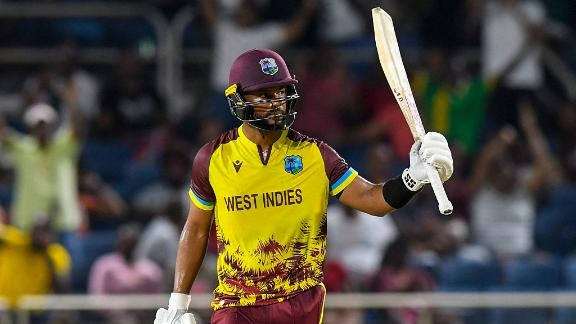
The contemporary scorecard between these two teams tells a story of clear Australian superiority in the longer formats, punctuated by incredible flashes of West Indian brilliance in the shorter versions of the game.
The T20 Revolution and the IPL Effect
The rise of T20 cricket and the IPL has been a boon for this rivalry. West Indian players like Chris Gayle, Kieron Pollard, Andre Russell, and Nicholas Pooran became global T20 superstars, often playing alongside and against their Australian counterparts. This has added a fascinating new layer of familiarity and respect.
Record-Breaking Performances:
- Chris Gayle’s 215 (2015 World Cup, Canberra): In a display of brutal power-hitting, Gayle became the first non-Indian to score a double-century in ODIs, blasting 16 sixes against the Aussies. The scorecard from that day is a monument to his destructive capability.
- The 400 Club: Both Brian Lara (400*) and Matthew Hayden (380) scored their record-breaking Test triple-centuries against other opponents, but their pursuit of the ultimate individual score added a subtle subtext to the batting rivalries of the early 2000s.
Memorable Match: The “Gabba Heist” (2024)
A recent and perfect example of the modern dynamic. In a two-Test series, Australia comfortably won the first Test. In the second, at the Gabba—a Australian fortress—they were set 216 to win. At 113 for 5, it seemed a formality. But then, an unheralded 26-year-old journeyman, Shamar Joseph, having retired hurt the previous night, returned with a broken toe to produce one of the most inspirational bowling spells in history. He took 7 for 68, single-handedly bowling the West Indies to a historic, against-all-odds victory. This match’s scorecard will forever be a testament to the fact that in cricket, heart can trump all the statistics.
Key Scorecard Takeaway from this Era:
- Test Cricket: Australia remains dominant, but the Windies’ famous victory in 2024 shows the flame of competition still burns bright.
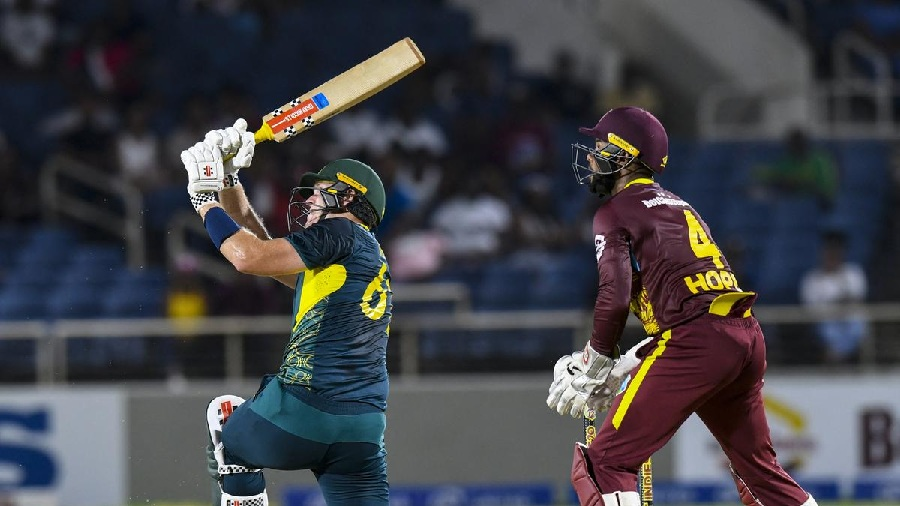
- T20s: This is where the West Indies are most dangerous. Their lineup of power-hitters makes every match a potential run-fest, and they have often gotten the better of Australia in bilateral T20 series and global events.
Conclusion: More Than Just Numbers on a Page
The scorecard of the West Indies vs. Australia rivalry is a living document. It tells us about more than wins and losses. It tells the story of Clive Lloyd’s grim determination, of Viv Richards’ swagger, of Shane Warne’s wizardry, and of Steve Waugh’s ruthlessness. It records the grace of Brian Lara and the power of Chris Gayle. And now, it immortalizes the raw courage of Shamar Joseph.
The numbers show Australia leading in the overall head-to-head in Tests and ODIs, a reflection of their sustained excellence over the last 30 years. But the West Indies’ entries, particularly from their golden era and in the explosive T20 format, are written in bold, unforgettable ink.
About the Author